Dental Implants Calabasas CA: A Complete Guide for New Patients
Losing a tooth changes more than your smile. It changes how you chew, how clearly you speak, and often how comfortable you feel in a room full of people. Many patients put off treatment for months or even years because they assume implants are too complex, too painful, or only appropriate for severe cases. Then they come in for a consultation and realize the process is far more practical, and far more routine, than they expected.
For patients researching Dental Implants Calabasas CA, the most useful starting point is not the technology itself. It is understanding what problem implants solve, who makes a good candidate, what the treatment path actually looks like, and what trade-offs exist compared with bridges or dentures. Those are the questions that matter when you are making a decision about your own health and your own budget.
Dental implants are not a cosmetic shortcut. They are a medical restoration designed to replace the root of a missing tooth and support a crown, bridge, or denture. When done well, they restore function in a way that feels stable and natural. They can also help preserve bone in the jaw, which is one reason dentists often recommend addressing missing teeth sooner rather than later.
Why implants are different from other tooth replacement options
A traditional bridge fills a gap by attaching a replacement tooth to neighboring teeth. That can work well in the right case, but it usually requires reshaping healthy teeth on either side. A removable denture replaces multiple teeth and can be a reasonable choice, especially when budget or anatomy limits other options. Still, dentures can shift during eating or speaking, and many patients never fully adapt to that movement.
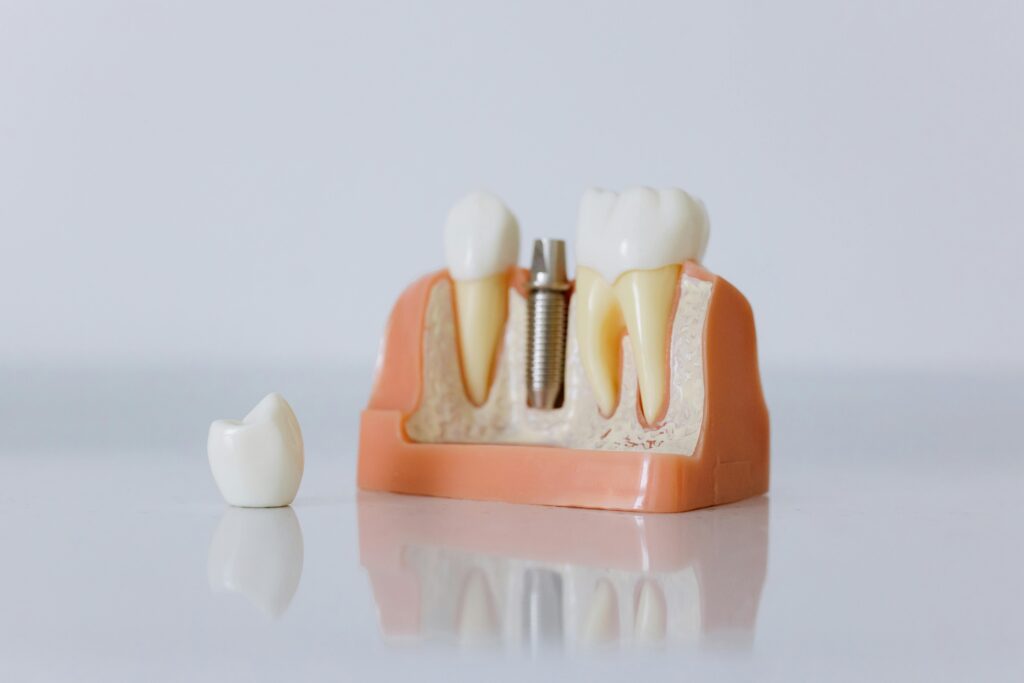
An implant works differently. A small titanium post, or in some cases another biocompatible material, is placed in the jawbone where the missing root used to be. Over time, the bone integrates with the implant. Once healed, the implant supports a crown or another prosthetic. Because the implant stands on its own, it does not rely on adjacent natural teeth for support.
That difference matters in daily life. Patients often describe the first good bite into an apple or a piece of grilled chicken as the moment it all makes sense. With a secure implant restoration, there is less of the hesitation that comes with a removable appliance and less worry about stressing neighboring teeth.
When a dental implant makes sense
Not every missing tooth automatically calls for an implant, but many do. If you have lost one tooth from decay, fracture, gum disease, or trauma, an implant is often the most conservative long-term replacement because it restores the gap without altering nearby teeth. If several teeth are missing, implants may support a bridge. If all teeth in an arch are missing, implants can anchor a full-arch prosthesis or stabilize a denture.
In practice, some of the best implant candidates are people who are simply tired of working around a problem. They chew mostly on one side. They avoid smiling in photos. They stop ordering certain foods in restaurants. They have learned to live with a compromised bite, but the compromise keeps spreading into normal life.
Age alone is rarely the deciding factor. Healthy adults in their sixties, seventies, and beyond often do very well with implants. What matters more is medical stability, bone quality, gum health, and your ability to heal predictably.
What makes someone a good candidate
Good candidates generally have adequate bone volume, healthy or treatable gums, and overall health that supports routine oral surgery. Smoking, uncontrolled diabetes, active periodontal disease, heavy grinding, and certain medications can complicate treatment, but they do not always rule it out. They simply require closer planning.
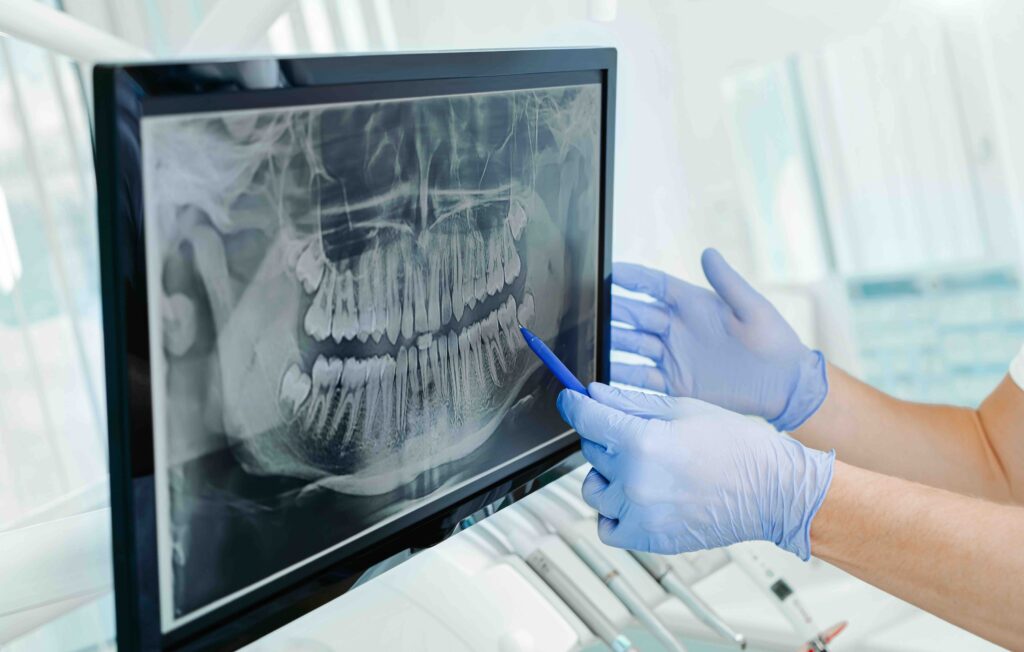
A careful implant consultation usually includes a clinical exam, digital imaging, a review of your medical history, and a discussion about goals. That last part gets overlooked. The correct treatment for a 28-year-old missing one front tooth is not necessarily the same as the correct treatment for a 74-year-old who wants a more stable lower denture and values fewer surgical steps.
One common misconception is that if a tooth has been missing for a long time, implants are no longer possible. Sometimes long-term tooth loss does lead to bone shrinkage, particularly in the upper back jaw or lower molar region. But many of those cases are still treatable with grafting, sinus augmentation, shorter implants, angled implants, or a different restorative plan. The details only become clear after imaging.
The consultation experience, what new patients should expect
New patients often arrive expecting a sales pitch or a lecture. A good implant consultation should feel more like a planning session. The dentist or specialist should evaluate the site, explain whether the problem is straightforward or complex, Dental Implants Calabasas CA and walk you through realistic Dental Implants Calabasas CA options. If something needs to be treated before implant placement, such as gum disease or a failing adjacent tooth, that should be addressed plainly.
You should expect conversation around timelines. Implants are not usually same-day fixes, even though certain cases allow immediate placement or immediate temporary teeth. More often, treatment unfolds in phases. The tooth may need extraction. The site may need time to heal, or bone grafting at the time of extraction. The implant is then placed, followed by a healing period before the final restoration is attached.
That spacing can frustrate patients at first. Yet the biology behind it is important. Bone and soft tissue need time to mature. Rushing can compromise the final result, especially in visible areas where gum contour matters as much as the crown itself.
The basic treatment sequence
The exact steps vary, but most implant cases move through a familiar pattern.
- Evaluation and imaging, often including a 3D scan to assess bone, anatomy, and spacing.
- Preparatory care if needed, such as extraction, infection control, gum treatment, or bone grafting.
- Implant placement, typically under local anesthesia, sometimes with sedation depending on the case and patient preference.
- Healing and integration, which often takes a few months before the implant is ready to support a final tooth.
- Final restoration, when the custom crown, bridge, or denture component is attached and adjusted.
This sequence can compress or expand depending on the site and the patient. A healthy front tooth fractured at the gumline may be extracted and replaced with an implant more quickly than a molar that has chronic infection and significant bone loss. Full-arch treatment often follows its own timeline and may involve provisional teeth during healing.
How much discomfort is typical
The fear of pain keeps many people from scheduling a consultation. In reality, most patients report that implant surgery was easier than they imagined. Numbing is usually profound, and many describe pressure more than pain during the procedure. Afterward, soreness tends to be manageable with prescribed or over-the-counter medication, cold compresses, and a softer diet for a few days.
The level of discomfort depends on what else is being done. A simple implant placement into a healed site is often less bothersome than a difficult extraction. Add bone grafting or multiple implants, and recovery may be more noticeable. That does not necessarily mean severe pain, just more swelling, more dietary restrictions, and a longer sense of tenderness.
I have heard the same sentence from patients many times in implant practices: “If I knew it would be like this, I would have done it sooner.” That does not mean the process is trivial. It means the anticipation is often worse than the experience.
Bone grafting and why it comes up so often
A missing tooth does not just leave a gap in the smile. It leaves the jawbone without its normal stimulation. Over time, the body resorbs bone that is no longer being used to support a tooth root. That is why grafting is such a common part of implant treatment.
Bone grafting can be performed at the time of extraction, before implant placement, or during implant placement. In the upper back jaw, where the sinus sits close to the roots of the teeth, some patients need a sinus lift to create enough vertical bone height. These procedures sound intimidating, but they are standard parts of modern implant dentistry.
Still, patients deserve honesty about the trade-offs. Grafting adds cost, healing time, and another variable. It also often expands who can become a candidate for implants, especially years after tooth loss. The right question is not whether grafting is ideal. It is whether grafting improves the long-term predictability of your case enough to justify the added effort.
Single tooth implants, multiple teeth, and full-arch cases
A single missing tooth is often the easiest situation to understand. One implant, one crown, and a restoration that functions independently. Where it gets more nuanced is in the front of the mouth, where esthetics are unforgiving. In those cases, tiny differences in implant angle, gum thickness, and neighboring tooth shape affect the final appearance. Technical precision matters.
When several teeth are missing in a row, a dentist may recommend two or more implants to support a bridge rather than placing an implant for every tooth. That can reduce cost while still providing fixed support. The decision depends on bone, bite forces, and how the space is distributed.
Full-arch treatment sits in a different category altogether. Patients who have failing teeth throughout the upper or lower arch may be deciding between conventional dentures, implant-retained overdentures, or fixed full-arch prosthetics. These solutions vary dramatically in price, maintenance, and feel. Some patients care most about stability. Others care most about easy cleaning or minimizing surgery. There is no universal best answer.
The cost question, and how to think about value
Cost is one of the first things patients search when looking into Dental Implants Calabasas CA. The hard part is that there is no honest single number. Fees vary based on the provider’s training, whether the procedure is straightforward or complex, whether grafting is necessary, the type of restoration used, and how many specialists are involved.
A single implant case often includes several separate components: the exam and scan, extraction if needed, grafting if needed, the implant itself, the abutment, and the final crown. Full-arch treatment is much more substantial and may include surgical guides, temporary prosthetics, and extensive laboratory work. This is why internet price comparisons can mislead patients. One office may quote only the implant post, while another presents a comprehensive fee.
A better way to assess value is to ask what is included, how many phases are anticipated, who handles each phase, and what happens if the site requires additional treatment once surgery begins. Clarity matters more than finding the lowest starting figure.
Choosing the right provider in Calabasas
Calabasas patients often have access to excellent dental care, but implant treatment still varies in philosophy and execution. Some dentists place and restore implants in-house. Others work as part of a team with an oral surgeon or periodontist. Neither model is automatically better. What matters is communication, planning, and case selection.
Here are a few questions worth asking during a consultation:
- How many implant cases like mine do you handle each year?
- Will you place and restore the implant, or will another specialist be involved?
- What imaging and planning tools do you use before surgery?
- What are the main risks or limitations in my specific case?
- What will maintenance look like once the final tooth is completed?
These questions do not need to sound confrontational. Good clinicians expect them. In fact, detailed answers usually tell you a lot about how carefully the case will be managed.
Healing time and why patience pays off
Healing is the least glamorous part of the process, but it is where long-term success is built. After implant placement, the bone needs time to fuse to the implant surface. For many patients that means roughly three to six months, though some heal faster and some need longer, especially after grafting.
During this phase, temporary solutions may be used. In visible areas, a temporary tooth can preserve appearance while the implant site matures. The challenge is balancing esthetics with protection. A temporary that looks great but overloads the implant is not a win. This is one reason dentists sometimes ask patients to avoid biting directly into foods with the temporary front tooth.
People who want everything finished before a wedding, graduation, or major work event should bring up those dates early. Sometimes the timeline can be coordinated. Sometimes it cannot, at least not without compromising the plan. Managing expectations at the beginning saves disappointment later.
Daily care after the implant is complete
One of the biggest misunderstandings about implants is that they are “maintenance free.” They do not get cavities, but they can still fail if plaque accumulates, the gums become inflamed, or the bite places too much stress on the restoration.
Home care matters. So do routine professional cleanings and periodic evaluation of the implant and surrounding tissues. Patients who grind their teeth may need a night guard to protect both implants and natural teeth. Patients with a history of gum disease often need shorter maintenance intervals.
A well-done implant should feel easy to live with. You should be able to clean around it, chew comfortably, and stop thinking about it most of the time. If a restoration constantly traps food, feels bulky, or makes hygiene difficult, that deserves attention.
Risks, limitations, and realistic expectations
Implants have high success rates, but they are not infallible. Early failure can happen if the implant does not integrate properly. Later problems can develop from gum inflammation, bone loss, smoking, poorly controlled medical conditions, or excessive bite forces. Esthetic compromises are also possible, especially in the smile zone where gum line changes are easy to see.
That does not mean implants are risky by default. It means success depends on planning, anatomy, hygiene, and follow-through. The most disappointed patients are often not the ones with the hardest cases. They are the ones who expected perfection without understanding the limitations.
A fair conversation includes both strengths and boundaries. For example, implants can restore chewing function very well, but they do not reproduce the same periodontal ligament sensation as a natural tooth. Most patients adapt and are pleased, yet the feel is still different in subtle ways. Likewise, implants can preserve bone compared with doing nothing, but they cannot always reverse years of bone loss without additional procedures.
Questions patients often forget to ask
Some of the most important details are practical rather than technical. Will you need time off work? Usually not much for a single implant, though some patients prefer a day or two. Will you be able to drive yourself home? Often yes with local anesthesia alone, though sedation changes that. Will insurance help? Sometimes partially, sometimes not, depending on the plan and how it categorizes different components of care.
Patients should also ask who they call if a temporary loosens, what foods to avoid during healing, and whether the office takes post-operative photos or scans to monitor progress. Small systems often reflect a larger culture of thoroughness.
Why timing matters more than many people realize
When a tooth is extracted and not replaced, the neighboring teeth can drift, the opposing tooth can over-erupt, and the bite can change in slow, unhelpful ways. Not every gap produces dramatic movement, but enough do that timing becomes part of treatment planning.
There is also the issue of bone preservation. In many cases, the easiest implant case is the one planned before or at the time of extraction. That does not mean you must decide immediately under pressure. It does mean the conversation is worth having early, while more options may still be available.
For patients in Calabasas balancing busy schedules, cosmetic concerns, and long-term oral health, that is often the turning point. Once they understand that implants are not only about replacing a missing tooth, but also about preserving the structure around it, the decision becomes clearer.
A final perspective for first-time implant patients
If you are new to the idea of Dental Implants Calabasas CA, the smartest first step is a thorough consultation with someone who can explain your specific anatomy and options without rushing you. Some cases are simple. Others need grafting, staged treatment, or coordination between providers. Both can turn out very well when the planning is honest and the expectations are clear.
Most patients are not looking for a lecture on biomaterials or surgical protocols. They want to know whether they will be able to chew comfortably, smile without thinking about a gap, and trust that the result will last. Those are reasonable goals. Good implant treatment is built around them.
A successful implant does not call attention to itself. It lets you eat dinner without favoring one side. It lets you speak without adjusting around a space. It lets your mouth feel whole again. For many patients, that is not just a dental upgrade. It is a return to normal life, which is often the most valuable outcome of all.
Oaks Dental
5000 Parkway Calabasas, Suite 308
Calabasas, CA 91302, United States
Phone: +1 (818) 412-8349
FAQ About Dental Implants Calabasas CA
How much does a dental implant cost in California?
Costs vary with the number of teeth replaced, restoration type, imaging, and any extractions or bone grafting. Request an itemized estimate after an examination; a single advertised price may not include every treatment stage.
Can people with autoimmune disease get dental implants?
Some people may qualify, but the condition, medications, oral health, and healing risks require individual assessment. Share your medical history with your dentist, who may coordinate with your treating physician.
Can you have dental implants if you have osteopenia?
Osteopenia does not by itself establish whether implants are suitable. Your dentist must evaluate jawbone support and review bone-related medications and other risks before recommending treatment.